Journey With Ann is an independent travel guide featuring practical destination articles, local recommendations, and trip-planning information.
Journey With Ann is an independent travel guide featuring practical destination articles, local recommendations, and trip-planning information.
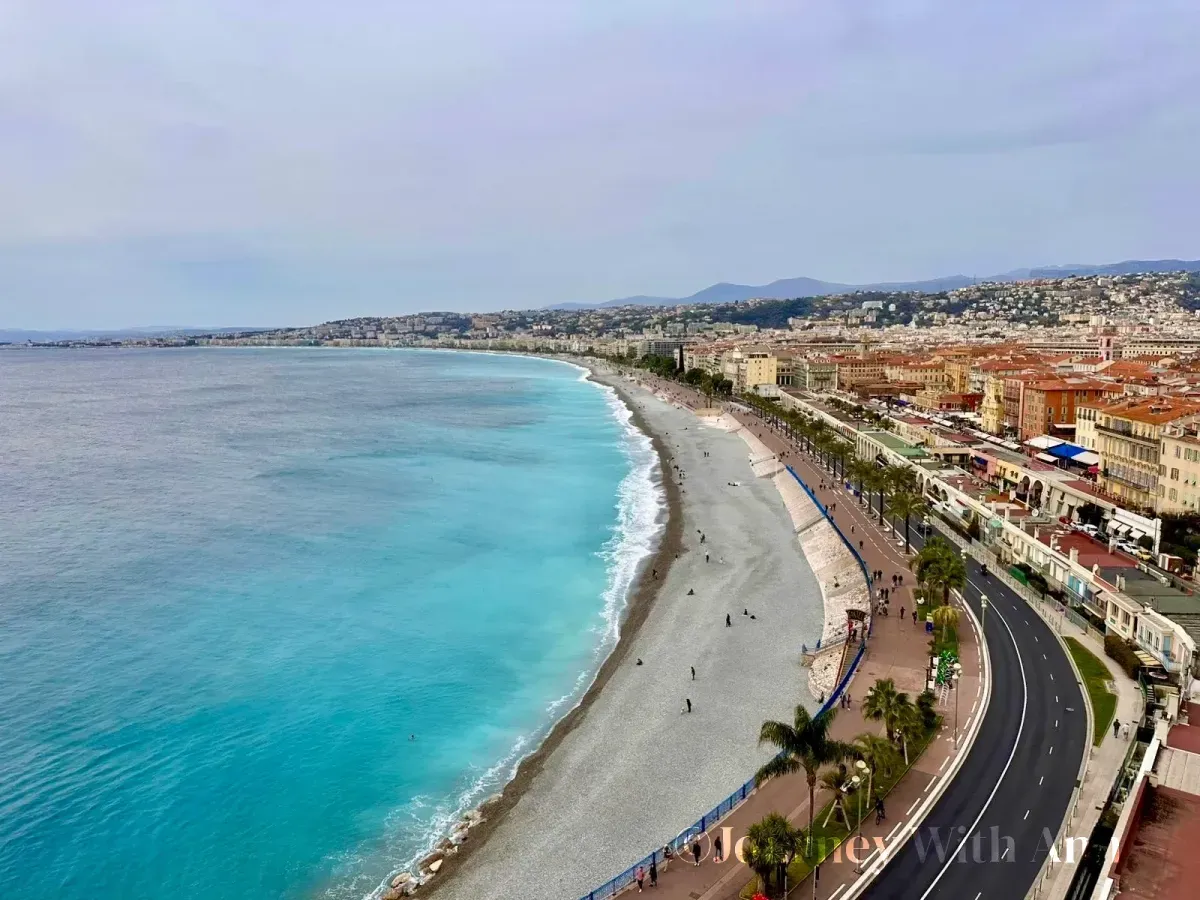
Planning a trip to Nice on the French Riviera? This guide covers the parts that matter once you are actually there: where to stay, how to get around, what to see, what the beaches are really like, and which small details can save you time and frustration. I have also included the things I noticed on my first trip that were much harder to find in other travel guides.
Parking in Nice falls into four main categories: street parking, underground garages, airport parking, and park-and-ride facilities. The city's park-and-ride network is called Parcazur. You leave the car beside a tram or bus stop and continue by public transport. For a visit of a couple of hours, a street space or a garage with a free first hour is usually best. For a full day, it often makes more sense to head straight to a garage. If you are arriving via the A8, the motorway that runs along the French Riviera, leaving the car at a Parcazur facility and taking the tram can be cheaper.
My first trip to the French Riviera lasted five days. I stayed in Nice, took the train to Monaco and Cannes, and left the rest of my time for Nice itself and local food. I traveled in March, so beaches did not shape the itinerary. For five days, that choice made more sense than trying to collect every town along the coast.